Steel Containers remain essential across manufacturing, logistics, construction, agriculture, and energy supply chains. Their strength supports heavy loads, repeated handling, and demanding storage conditions. Yet “steel container” is not one standard product. A 200-liter drum, an ISO tank, and a roll-off container serve very different operating needs.
The World Steel Association reported global crude steel production of approximately 1.89 billion tonnes in 2023. This enormous production base supports container manufacturing, repair networks, and replacement availability worldwide. UNCTAD’s Review of Maritime Transport 2024 recorded about 862 million TEUs in global container port throughput during 2023. That figure shows the scale of modern cargo movement, although not every TEU uses a steel structure. The comparison still matters. Durable equipment must survive lifting, stacking, salt air, vibration, and repeated inspections.
This guide reviews ten widely used Steel Containers, including shipping containers, drums, tanks, bins, and specialized units. Each type is assessed through practical criteria: capacity, payload, corrosion resistance, access points, ventilation, handling method, and maintenance demands. Real procurement experience shows that the cheapest container can create higher costs later. Poor coating selection causes rust. Incorrect dimensions waste warehouse space. Weak door hardware can delay loading.
Standards and certification also deserve careful attention. ISO specifications, UN packaging rules, and local transport requirements may apply, depending on the container’s use. Requirements can differ between regions. This overview is useful, but it cannot replace an engineer’s inspection or a compliance review. Some categories overlap, and real-world applications are less tidy than product brochures suggest.
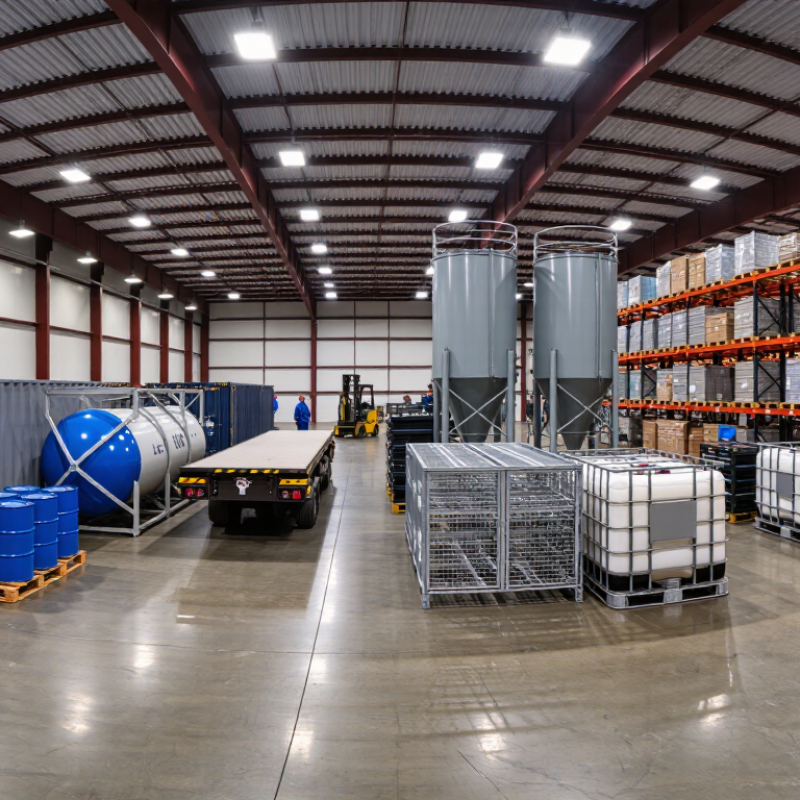
Steel containers are rigid vessels made mainly from carbon steel, stainless steel, or galvanized steel. Their walls resist impact, stacking pressure, and outdoor handling. The material choice depends on the cargo, climate, cleaning method, and expected service life.
Carbon steel offers strength at a practical cost, but it needs paint, lining, or galvanizing against corrosion. Stainless steel performs better where hygiene, moisture, or repeated washing matters. Aluminum is lighter, yet steel often provides stronger protection during rough transport. In real purchasing work, small details matter. Door seals, weld quality, floor thickness, and drainage points can affect daily performance more than appearance.
Industrial uses vary widely. Shipping containers move machinery, packaged goods, and production materials across ports and rail networks. Drums and intermediate bulk containers support oils, powders, and approved industrial liquids. Tank containers serve controlled liquid transport under applicable safety standards. Open-top units handle scrap, aggregates, and construction debris. Food processors may choose stainless steel bins for ingredients and washable handling areas. Agriculture uses steel hoppers for grain and feed, while factories rely on racks, bins, and returnable containers for parts.
No steel container is perfect. A thick wall adds weight and transport cost. A thin wall may dent sooner. Buyers should check load limits, corrosion exposure, temperature changes, and local compliance requirements before ordering. A container that works indoors may fail near salt air. That mistake is common.
Standard shipping containers remain the core equipment for global cargo transport. UNCTAD’s Review of Maritime Transport reports that shipping carries over 80% of world merchandise trade by volume. That scale makes container selection a practical cost decision, not a technical detail.
The main steel options include 20-foot standard, 40-foot standard, 40-foot high-cube, 45-foot high-cube, open-top, flat-rack, side-door, double-door, insulated, and refrigerated containers.
Standard units suit cartons, machinery, furniture, and palletized goods. High-cube models provide extra vertical clearance for bulky cargo. Open-top containers handle tall loads, while flat-racks support heavy machinery. Refrigerated units require stable power and temperature monitoring.
The container fleet is measured in TEU, meaning twenty-foot equivalent units. Industry reports from UNCTAD show continued growth in container vessel capacity, but port delays and equipment imbalance still affect delivery planning. A steel box may look simple. It is not always simple. Corrosion, floor damage, door alignment, and hidden repairs can create expensive surprises.
Buyers should request inspection records, internal dimensions, payload limits, and CSC safety certification. The stated payload is not the same as safe loading in every route or terminal.
Tips: Match container size with cargo density, not only volume. Leave space near doors for inspection. Protect steel floors from concentrated machine weight. Check ventilation needs before sealing cargo. I would also allow a small contingency budget; real transport conditions rarely follow the spreadsheet perfectly. UNCTAD data supports careful planning, yet local terminal rules and weather can still change the outcome.
Specialized Steel Containers for Liquids, Solids, and Hazardous Goods
Steel containers serve very different cargo needs. A liquid tank container supports bulk transport across road, rail, and sea. Stainless steel versions suit food-grade liquids, chemicals, and products requiring clean internal surfaces. Steel drums handle oils, coatings, powders, and dense materials in smaller volumes. Their removable lids or tight heads affect filling speed and spill control.
Intermediate bulk containers offer a practical balance between capacity and handling. For dry solids, steel bins, hoppers, and sealed boxes protect powders from moisture, impact, and contamination. Open-top containers work well for scrap or mineral materials, while closed designs provide better weather protection. Pressure-rated vessels require stronger shells, tested fittings, and carefully controlled operating limits. Small details matter, especially gasket material and valve placement.
Hazardous goods demand more than thick steel. Buyers should verify applicable transport rules, container markings, pressure tests, grounding provisions, and inspection records. Competent engineers must match the container with the cargo’s density, temperature, vapor pressure, and chemical compatibility. A container that works for one liquid may fail with another. That mistake is costly.
No design fits every route. Corrosion, cleaning access, loading equipment, and local infrastructure can change the best choice. Buyers should request drawings, material certificates, test reports, and maintenance guidance before ordering. Specifications are helpful, but field conditions often expose gaps. Rechecking them is wise.
Top 10 Types of Steel Containers for Global Buyers
Custom steel containers support storage, equipment protection, and demanding site applications. Common formats include general storage boxes, tool containers, mobile workshops, site offices, generator enclosures, cable stores, spare-parts units, archive containers, waste-sorting units, and modular equipment rooms.
Each type needs a different design response. Storage units may require shelving, ventilation, and lockable doors. Generator enclosures need airflow, acoustic treatment, cable entries, and service access. Site offices benefit from insulation, lighting, flooring, and safe electrical routing. Workshop containers need reinforced floors and practical workbench layouts. Small details matter.
According to UNCTAD’s Review of Maritime Transport 2024, global seaborne trade reached about 12.3 billion tonnes in 2023. This scale increases demand for durable, transport-ready steel units. The World Steel Association’s October 2024 Short Range Outlook projects global steel demand at approximately 1.79 billion tonnes in 2024. Material availability is strong, but quality still depends on fabrication control.
ISO 668 helps define container dimensions, while CSC requirements support structural safety for eligible transport units. However, not every custom steel container is intended for international shipping. Confirm lifting points, payload, floor capacity, corrosion protection, and local installation rules before production.
A strong shell is not enough. Field inspections often find poor drainage or awkward maintenance access. These are preventable design failures. Clear drawings, weld inspections, coating checks, and factory testing improve reliability. Sometimes, a simpler container performs better.
| No. | Container Type | Typical External Dimensions | Typical Usable Volume | Typical Payload or Capacity | Common Applications | Customization and Specification Considerations |
|---|---|---|---|---|---|---|
| 1 | 20-Foot General-Purpose Container | Length: 6.06 m Width: 2.44 m Height: 2.59 m |
Approximately 33 m³ | Usually up to about 28,000 kg, subject to tare weight, gross-weight limits, and local regulations | Cargo storage, machinery, tools, spare parts, construction materials, and export shipping | Steel shelving, personnel doors, ventilation, lighting, electrical outlets, lock boxes, floor reinforcement, insulation, and internal partitions |
| 2 | 40-Foot General-Purpose Container | Length: 12.19 m Width: 2.44 m Height: 2.59 m |
Approximately 67–68 m³ | Usually up to about 26,000–28,000 kg, depending on tare weight and transport restrictions | High-volume storage, palletized goods, furniture, packaged materials, and project cargo | Double personnel doors, shelving systems, access ramps, interior lining, anti-condensation treatment, windows, and site electrical systems |
| 3 | 40-Foot High-Cube Container | Length: 12.19 m Width: 2.44 m Height: 2.90 m |
Approximately 76 m³ | Usually up to about 26,000–28,000 kg, subject to container tare and road or port limits | Bulky equipment, lightweight goods, tall components, warehouse overflow, and modular site storage | Extra-high racking, overhead lighting, cable trays, mezzanine-compatible layouts, insulated panels, and upgraded access systems |
| 4 | Open-Top Container | Common lengths: 6.06 m or 12.19 m Width: 2.44 m Height: approximately 2.59 m |
Approximately 32–66 m³, depending on length and roof arrangement | Typically similar to a general-purpose container of the same length; exact limits depend on design and lifting method | Oversized machinery, scrap steel, timber, stone, glass, and cargo loaded by crane or through the roof | Removable tarpaulin roof, removable top headers, reinforced floor, lifting points, internal lashing rings, and corrosion-resistant finishes |
| 5 | Flat-Rack Container | Common lengths: 6.06 m or 12.19 m Width: approximately 2.44 m Deck height varies by design |
Open-sided; cargo envelope is defined by deck length, width, and allowable height | Approximately 20,000–40,000 kg, depending on length, fixed or collapsible design, and load distribution | Heavy machinery, steel structures, transformers, pipes, vehicles, and out-of-gauge project cargo | Fixed or folding end walls, lashing rings, gooseneck tunnels, reinforced decks, removable posts, and engineered load-spreading arrangements |
| 6 | Side-Opening Container | Common lengths: 6.06 m or 12.19 m Width: 2.44 m Height: 2.59 m or 2.90 m |
Approximately 33–76 m³ | Generally comparable to a standard container of the same size, subject to door and floor loading limits | Long goods, retail displays, event equipment, workshop storage, and locations with limited front access | Full-side bi-fold doors, multiple personnel doors, internal partitions, shelving, ramp systems, security locks, and weather seals |
| 7 | Refrigerated or Insulated Container | Common lengths: 6.06 m or 12.19 m Width: approximately 2.44 m Height: approximately 2.59–2.90 m |
Approximately 28–67 m³, depending on insulation thickness and equipment layout | Often approximately 20,000–28,000 kg; refrigeration machinery and floor design reduce available payload | Temperature-sensitive products, laboratory equipment, food storage, pharmaceuticals, and climate-controlled workspaces | Insulated panels, refrigeration units, data loggers, temperature alarms, hygienic wall lining, stainless-steel interiors, and backup power connections |
| 8 | Tank Container | Usually based on a 20-foot frame Length: approximately 6.06 m Width: 2.44 m Height: generally below 2.60 m |
Common liquid capacities: approximately 14–26 m³ | Tank capacity is calculated from liquid density, maximum gross mass, and applicable transport regulations | Transport and temporary storage of approved liquids, including food-grade, industrial, and regulated substances | Material selection, insulation, heating systems, discharge valves, pressure-relief devices, grounding, manways, and certification for the intended cargo |
| 9 | Roll-Off Steel Container | Typical length: 4–7 m Width: 2.0–2.5 m Side height: approximately 0.8–2.0 m |
Approximately 10–40 m³ | Common working payload: approximately 10,000–30,000 kg, depending on frame, floor, axle, and lifting system | Construction waste, demolition debris, scrap metal, aggregates, municipal waste, and industrial clean-up operations | Open or covered top, hinged or swing doors, reinforced floor, drainage, lifting hooks, wear plates, internal liners, and corrosion-protection coatings |
| 10 | Bunded Chemical or Flammable-Liquid Storage Container | Commonly based on a 6.06 m or 12.19 m steel container Width: approximately 2.44 m Height: approximately 2.59 m |
Storage capacity varies by tank arrangement; secondary containment is normally sized for the applicable regulation | Determined by tank capacity, liquid density, floor loading, and the required safety clearance | Controlled storage of fuels, oils, chemicals, lubricants, and hazardous liquids at industrial or construction sites | Integrated spill bund, ventilation, fire-rated construction, hazardous-area electrical equipment, grounding, leak detection, emergency signage, and access control |
| Note: Dimensions, volumes, payloads, temperature ranges, and regulatory requirements are typical industry values. Final specifications should be confirmed against the selected container design, cargo characteristics, transport route, local building codes, and applicable international standards. | ||||||
Global buyers compare steel container types by cargo shape, weight, route, and handling equipment. The common choices include standard dry, high-cube, open-top, side-opening, double-door, flat-rack, platform, refrigerated, tank, and insulated containers. ISO 668 defines key external dimensions, but usable capacity still varies with wall thickness and fittings. A 40-foot high-cube unit offers more vertical space, while a 20-foot unit often handles dense cargo more efficiently.
The figures matter. UNCTAD’s Review of Maritime Transport 2024 reported global maritime trade of about 12.3 billion tonnes in 2023. This scale increases pressure on buyers to reduce empty space and handling delays.
For steel quality, the World Steel Association reported approximately 1.89 billion tonnes of crude steel production in 2023. Buyers should therefore check plate thickness, corner-casting accuracy, welding quality, coating system, door compression, and floor loading limits.
Small specification differences can create large repair costs.
For machinery, flat-racks need verified lashing points and tested payload ratings. Open-top containers suit tall cargo, but tarpaulin protection requires careful inspection. Tank containers demand compatible materials, pressure records, and documented cleaning controls.
Refrigerated units need temperature-range testing, insulation checks, and power compatibility. In practice, catalog dimensions can mislead. Internal measurements, tare weight, CSC certification, and local lifting limits should be confirmed in writing.
A lower purchase price is not always economical. I would also recheck corrosion protection after one wet-season shipment, because initial inspections can miss hidden damage.
It suits cartons, furniture, machinery, and palletized goods. Check cargo weight, not volume alone. Measure twice.
Choose it for bulky cargo needing extra vertical clearance. Leave door space for inspection. More height does not fix excess weight.
It handles tall cargo loaded through the roof. Cover the opening carefully against rain. Weather plans can fail.
Flat-racks support oversized machinery and concentrated loads. Protect the steel floor with load-spreading plates. Weight placement matters.
Request inspection records, internal dimensions, payload limits, and safety certification. Check corrosion, floors, doors, and hidden repairs. Look underneath, too.
No. Some are designed only for storage or site use. Confirm lifting points, payload, dimensions, and transport certification before production.
It may need insulation, lighting, flooring, and safe electrical routing. Plan cable paths early. Small mistakes become expensive later.
Provide airflow, acoustic treatment, cable entries, and service access. Keep maintenance areas reachable. A strong shell alone is insufficient.
Poor drainage can trap water around floors and walls. Use clear drawings and inspect fabrication quality. This failure is preventable.
Match container size with cargo density and local rules. Add a small contingency budget. Spreadsheets miss weather and terminal delays.
Steel Containers are durable, versatile solutions designed to protect, store, and transport goods across industrial and commercial environments. Made from materials such as carbon steel, stainless steel, or weather-resistant coated steel, they are selected for strength, corrosion resistance, load capacity, and service life. Standard shipping containers support global cargo transport, while specialized designs serve liquids, powders, bulk solids, temperature-sensitive materials, and regulated industrial goods through suitable linings, closures, ventilation, and safety features.
Custom steel containers can also be developed for machinery, tools, equipment, construction sites, warehouses, and temporary storage. Their dimensions, access points, stacking structure, lifting provisions, insulation, and surface treatment may be adapted to specific operating conditions. When comparing Steel Containers, global buyers should evaluate cargo type, volume, weight, handling methods, environmental exposure, durability, maintenance needs, certification requirements, and total ownership cost. A clear understanding of these specifications helps buyers choose a practical, compliant, and reliable container for transportation, storage, or specialized site applications.

Durack