Choosing among the 10 Best Steel Platforms for Global Industrial Buyers requires more than comparing prices. A reliable platform must carry people, equipment, and stored materials safely. It must also withstand vibration, corrosion, wind, and repeated loading.
Dr. Terri Boake, a recognized steel-construction educator, states, “Steel design begins with understanding behavior, not simply choosing sections.” That principle matters during international procurement. Buyers should review load ratings, steel grades, weld quality, surface protection, drainage, and installation tolerances. Documents should include material certificates, welding procedures, inspection records, and traceability details. Standards such as ASTM, EN 1090, ISO 3834, or equivalent local requirements can support a more dependable evaluation.
A glossy finish proves little.
Real performance appears at the joints. It appears around bolt holes, handrails, stairs, and drain channels. Galvanized steel may suit humid environments, while coated carbon steel can offer practical value in controlled facilities. Stainless steel may perform better near aggressive chemicals, but its higher cost requires careful justification.
This guide examines leading Steel Platforms through a buyer’s practical lens. It considers structural capacity, customization, safety features, delivery support, maintenance demands, and supplier transparency. No ranking is perfect. Site conditions differ, and published specifications can hide important limitations. Buyers should verify calculations with qualified engineers and confirm local compliance before ordering. A platform that looks efficient on paper may still create installation problems. That is worth remembering.
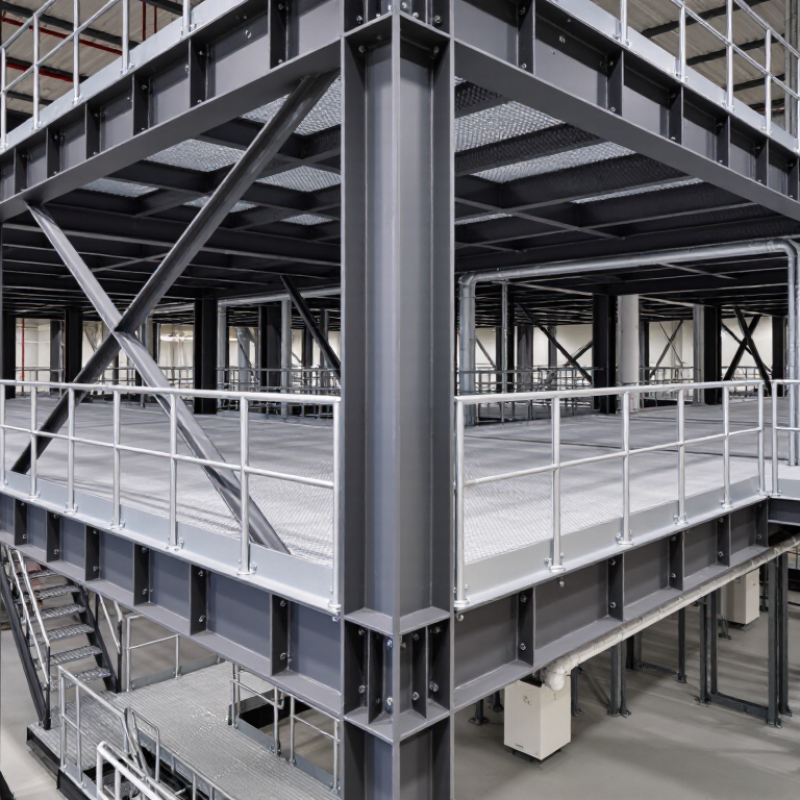
Global industrial buyers need more than a searchable catalog. A reliable steel platform proves what happens after the inquiry. From my experience reviewing suppliers, traceability is the practical starting point. Every coil, plate, or structural section should carry a heat number linked to mill records. The platform should show grade, thickness tolerance, surface condition, and testing standards in plain language. Vague specifications create expensive surprises.
Reliability also appears in ordinary communication. Can the seller answer a technical question without copying a generic paragraph? Can it confirm available tonnage, production timing, packing details, and port arrangements? Strong platforms keep these details visible and update them when conditions change. They protect buyer data, use transparent payment procedures, and explain dispute handling before money moves. That sounds basic. It is not always practiced. A useful platform also understands destination requirements, including documentation, labeling, and import checks. This reduces delays at the warehouse, where one missing certificate can stop a truck.
Still, digital confidence deserves caution. Professional images do not prove stable quality. I would compare recent test certificates, request a small sample, and inspect packaging before scaling an order. Even careful buyers can miss problems when deadlines tighten. That weakness should shape the process, not be hidden. Reliable platforms make verification easy, record changes, and provide a real person for escalation. A buyer should trace each claim to a document, inspection, or accountable contact.
10 Best Steel Platforms for Global Industrial Buyers
Comparing steel platforms requires more than checking price and product photos. Start with the grade. Confirm chemical limits, yield strength, tensile strength, and impact performance for the intended application. A structural beam, pressure component, and galvanized sheet need different evidence. Ask for the applicable standard, heat number, test certificate, and production date. Product descriptions can sound precise while hiding important gaps.
Supplier networks deserve equal attention. Review factory locations, inspection procedures, export experience, and backup production capacity. A strong platform should show how suppliers are screened, not only how many suppliers are listed. Check whether certificates come from independent laboratories or internal departments. Request sample documents before placing a large order. One missing value can delay customs clearance or force expensive retesting.
Tips: Build a comparison sheet with grade, dimensions, tolerance, coating, minimum order, lead time, and inspection terms. Compare delivered cost, not the listed unit price. Check three suppliers for the same specification. Keep communication in writing. No scorecard is perfect. I would also add a risk column, because weather delays, port congestion, and changing material availability can affect even careful plans. If a supplier avoids direct answers about traceability, pause the purchase. A polished website is not proof of consistent steel quality.
| Platform | Steel Grade and Standard Examples | Primary Product Forms | Indicative Mechanical Property | Typical Service Profile | Common Industrial Applications | Key Buyer Verification Points | Supplier-Network Fit |
|---|---|---|---|---|---|---|---|
|
01 Structural Carbon Steel Platform |
EN 10025-2 S275JR EN 10025-2 S355JR ASTM A36 | Hot-rolled plate, sheet, sections, beams, channels, angles, bars and hollow sections. | Minimum yield strength is commonly 275 MPa for S275JR and 355 MPa for S355JR at specified thickness ranges. ASTM A36 has a minimum yield strength of approximately 250 MPa. | General outdoor and indoor structural service; weldability depends on grade, thickness and fabrication procedure. | Buildings, bridges, platforms, frames, machinery bases and general fabrication. | Confirm standard edition, thickness-dependent yield strength, impact class, chemical limits, weldability and mill test certificate. | Broadest global availability; suitable for buyers requiring multiple product forms and regional stock options. |
|
02 High-Strength Low-Alloy Platform |
ASTM A572 Grade 50 EN 10149-2 S500MC ASTM A656 | Hot-rolled coil, plate, strip, structural sections and formed components. | ASTM A572 Grade 50 provides a minimum yield strength of about 345 MPa; S500MC provides a minimum yield strength of about 500 MPa under its specified delivery condition. | Higher strength-to-weight ratio than ordinary structural carbon steel; forming and welding controls are important. | Transport equipment, cranes, agricultural machinery, trailers and lightweight structural frames. | Check yield and tensile requirements, bend radius, weld heat input, thickness range and supplied condition. | Strong fit for buyers consolidating several lower-weight, high-load components across multiple manufacturing regions. |
|
03 Weathering Steel Platform |
EN 10025-5 S355J2W ASTM A588 ASTM A242 | Weathering plate, sheet, structural sections, bridge components and fabricated assemblies. | Typical minimum yield strength is approximately 345–355 MPa, depending on grade, product thickness and applicable standard. | Forms a protective oxide layer in suitable alternating wet-and-dry atmospheric exposure; not automatically suitable for continuously wet, marine or buried service. | Bridges, railcars, outdoor sculptures, architectural façades and exposed structural frames. | Evaluate local humidity, chloride or sulfur exposure, drainage, crevice details, surface appearance and paint requirements. | Best for coordinated regional supply where the design authority can approve weathering-steel availability and fabrication procedures. |
|
04 Pressure-Vessel and Boiler Steel Platform |
ASTM A516 Grade 60 ASTM A516 Grade 70 EN 10028-3 P355NH | Normalized plate, dished-head blanks, shell courses and welded pressure equipment components. | ASTM A516 Grade 70 has a typical minimum yield strength of approximately 260 MPa; exact values vary with thickness and standard requirements. | Designed for welded pressure vessels and moderate-to-elevated temperature service; impact and notch-toughness requirements may apply. | Boilers, storage tanks, heat exchangers, separators and process vessels. | Confirm code jurisdiction, heat treatment, impact testing, ultrasonic testing, carbon equivalent and traceability documentation. | Suitable for qualified suppliers with certified plate processing, forming, welding and non-destructive testing capabilities. |
|
05 Austenitic Stainless Steel Platform |
AISI 304 / EN 1.4301 AISI 316 / EN 1.4401 ASTM A240 | Cold-rolled sheet, hot-rolled plate, coil, tube, pipe, bar, fittings and fabricated parts. | Annealed 304 and 316 stainless steel commonly have a minimum yield strength near 205 MPa under ASTM product specifications. | Good general corrosion resistance; 316 provides improved resistance to chlorides compared with 304 because of its molybdenum content. | Food processing, chemical equipment, architectural products, pharmaceutical equipment and piping. | Verify grade, surface finish, solution annealing, corrosion environment, weld sensitization risk and ferrite requirements where relevant. | Excellent for global sourcing because sheet, tube and long-product supply is available in many industrial regions. |
|
06 Ferritic Stainless Steel Platform |
AISI 430 / EN 1.4016 AISI 409 / EN 1.4512 ASTM A240 | Cold-rolled sheet, strip, plate, exhaust tubing and formed components. | Typical minimum yield strength for annealed 430 sheet is around 205 MPa, depending on product specification and thickness. | Magnetic stainless steel with useful oxidation and corrosion resistance; generally lower nickel content than common austenitic grades. | Appliances, automotive exhaust components, kitchen equipment and decorative panels. | Check forming limits, surface finish, weldability, magnetic properties, chromium content and resistance to the intended environment. | Good fit for cost-sensitive, high-volume sheet-metal programs with consistent coil and finishing requirements. |
|
07 Martensitic Stainless Steel Platform |
AISI 410 / EN 1.4006 AISI 420 / EN 1.4021 ASTM A276 | Bar, rod, forgings, plate, strip, cutlery stock and machined components. | Strength varies greatly with heat treatment; quenched and tempered products can reach substantially higher hardness and strength than annealed material. | Heat-treatable stainless steel offering higher hardness and wear resistance, with corrosion resistance generally below 304 and 316. | Valves, pumps, shafts, surgical instruments, blades and wear-resistant components. | Specify annealed or heat-treated condition, hardness range, tensile properties, corrosion exposure and machining allowance. | Best for qualified component suppliers able to control melting, forging, heat treatment and final inspection. |
|
08 Duplex Stainless Steel Platform |
2205 / EN 1.4462 ASTM A240 ASTM A790 | Plate, sheet, seamless and welded pipe, tube, bar, forgings and fittings. | Solution-annealed 2205 commonly has a minimum yield strength of approximately 450 MPa, subject to product standard and thickness. | High strength and strong resistance to chloride stress-corrosion cracking and pitting compared with many conventional austenitic grades. | Offshore equipment, desalination, chemical processing, oil and gas systems and marine piping. | Verify phase balance, solution-annealing temperature, corrosion testing, ferrite range, welding procedure and heat input. | Suitable for technically demanding global programs where supplier qualification and metallurgical documentation are essential. |
|
09 Tool and Die Steel Platform |
AISI D2 AISI H13 AISI O1 ASTM A681 | Round bar, flat bar, ground bar, blocks, plates, forgings and pre-machined die blanks. | Performance is normally specified by hardness and heat-treated condition rather than a single universal yield-strength value; D2 and H13 can reach high working hardness after treatment. | Selected according to wear resistance, toughness, hot-work temperature, thermal fatigue and dimensional stability. | Stamping dies, molds, cutting tools, extrusion tooling and industrial knives. | Confirm steel grade, cleanliness, carbide distribution, annealed hardness, heat-treatment route, dimensional tolerance and inspection method. | Best for specialist supplier networks with vacuum melting, ESR capability, controlled heat treatment and precision grinding. |
|
10 Hot-Dip Galvanized Steel Platform |
EN 10346 DX51D EN 10346 S350GD ASTM A653 CS | Coated coil, sheet, roofing sheet, roll-formed sections and fabricated panels. | Mechanical properties depend on the substrate grade; S350GD, for example, is specified with a minimum yield strength of approximately 350 MPa. | Zinc coating provides sacrificial protection to exposed steel; coating mass, environment and cut-edge treatment determine service life. | Roofing, façades, HVAC ducting, automotive parts, solar structures and light-gauge framing. | Specify coating designation such as Z275, surface quality, passivation or oiling, bend radius, coating adhesion and cut-edge protection. | Highly suitable for regional distribution because coated coil can support standardized, repeatable sheet-metal production. |
For global industrial buyers, a steel trading platform should feel like a controlled purchasing desk, not a crowded marketplace. The ten leading platforms typically combine verified supplier profiles, mill certificates, updated offers, and searchable grades. Buyers can filter carbon steel, stainless steel, plate, coil, tube, or structural sections. Clear minimum order quantities matter. So do production lead times. Some platforms provide RFQ tools, quote comparison, logistics coordination, and payment safeguards. These features reduce repeated emails and reveal hidden cost gaps before a purchase order is issued.
Reliable platforms also show traceability details, including heat numbers, inspection records, origin data, and document revision dates. Technical filters should cover thickness tolerance, coating weight, standards, and acceptable substitutions. A useful dashboard records conversations and approval steps. This helps procurement teams audit decisions months later. Yet, digital listings can become outdated. I have seen attractive prices lose value after freight, currency changes, or port charges were added. A platform deserves trust only when it explains data sources, refresh times, dispute procedures, and seller verification methods. That standard is easy to state, but harder to maintain.
Tips: Request a recent certificate before serious negotiations. Compare landed costs, not listing prices. Confirm stock, packing details, inspection terms, and delivery dates in writing. A small trial order can expose weaknesses, although it may not represent every future shipment. Review each platform’s protections carefully.
Global industrial buyers need more than a large steel supplier directory. A reliable platform should make pricing, quality control, logistics, and buyer protection visible before payment. Request itemized quotes covering steel grade, thickness, tolerance, surface finish, packaging, and delivery terms. Compare the landed cost, not only the factory price. Currency changes, port charges, and inland transport can quietly change the budget. Ask for production capacity and realistic lead times.
Quality evidence must be specific. Require mill certificates, batch numbers, inspection photos, and measurable acceptance standards. Independent inspection can verify dimensions, weight, welding quality, and surface defects before shipment. Photos help, but they are not enough. Small gaps matter. A sample order may reveal inconsistencies hidden in a polished listing. Platforms should also show supplier history, response records, and clear dispute procedures. Verification labels can support research, but they should never replace documentation.
Logistics details deserve equal attention. Confirm Incoterms, loading methods, container limits, export documents, and expected customs responsibilities. Build a buffer for weather, port congestion, and production delays. Buyer protection should explain payment control, refund conditions, evidence requirements, and claim deadlines in plain language. Protection is not automatic. In practical evaluations, some platforms display attractive unit prices while leaving testing and inland trucking unclear. That weakness requires direct questions and written confirmation. A simple scorecard can compare price clarity, certificate quality, shipment reliability, and dispute support across ten platforms.
Benchmark comparison across pricing, quality control, logistics, and buyer protection.
Scores use a 100-point normalized procurement index: price competitiveness 35%, quality control 30%, logistics capability 20%, and buyer protection 15%. The labels are anonymized platform profiles for comparison and do not represent any specific company or brand.
Selecting the right steel platform begins with the working conditions, not the product catalog. Define the load, span, platform height, traffic frequency, and installation space. Include tools, workers, stored materials, and occasional impact loads. A platform that looks strong may still flex under repeated movement. Measure twice.
Steel grade matters, but the surrounding environment matters more. Galvanized steel suits many indoor and moderately exposed areas. Coated or stainless options may perform better near moisture, chemicals, or coastal air. Check the deck surface carefully. Serrated grating can improve drainage and grip, while solid plate reduces falling objects and simplifies cleaning.
Ask suppliers for load calculations, material certificates, welding procedures, and inspection records. Confirm tolerances, anchor details, guardrail height, stair angles, and maintenance access before fabrication. On one industrial project, a late pipe-routing change forced costly platform modifications. The design was structurally sound, yet coordination was weak. That experience changed my review process: compare drawings with real equipment, cable routes, doors, and lifting paths. Price should include transport, corrosion protection, installation, inspections, and future repairs. A lower quote is not always lower cost.
Compare chemical limits, yield strength, tensile strength, impact performance, dimensions, and tolerances. Match evidence to the application. A beam needs different proof than a pressure component. Start with the grade.
Request the applicable standard, heat number, test certificate, production date, and origin details. Ask for recent samples before placing a large order. Missing values can delay customs clearance or cause retesting.
Review factory locations, inspection procedures, export experience, and backup production capacity. Check whether laboratories are independent or internal. A long supplier list proves little.
Compare landed costs, including freight, port charges, currency changes, packing, inspections, and taxes. A low listed price can become expensive. The spreadsheet may still miss weather delays.
Useful platforms offer verified profiles, searchable grades, current offers, quote tools, and logistics coordination. They should record messages and approval steps. Clear minimum order quantities matter.
Ask when prices, stock data, and certificates were updated. Review seller verification methods, document revisions, and dispute procedures. A polished website is not proof.
Define the load, span, height, traffic, installation space, and occasional impact loads. Include workers, tools, and stored materials. Measure twice.
Galvanized steel fits many indoor and moderately exposed areas. Coated or stainless steel may suit moisture, chemicals, or coastal air better. Serrated grating improves grip and drainage, while solid plate simplifies cleaning.
Confirm load calculations, welding procedures, anchor details, guardrail height, stair angles, tolerances, and maintenance access. Compare drawings with doors, cables, pipes, and lifting paths. Coordination is easy to underestimate.
A small trial order can reveal packing, documents, inspection, and delivery weaknesses. It cannot represent every future shipment. Keep communication in writing, and include a visible risk column.
Choosing among Steel Platforms is an important decision for global industrial buyers seeking dependable supply, consistent quality, and efficient delivery. A reliable platform should offer clear product information, verified supplier networks, traceable steel grades, transparent pricing, and practical support for international transactions. Buyers should compare specifications, certifications, production capabilities, minimum order quantities, lead times, and the range of available products before making a commitment.
This guide reviews the key features that distinguish ten leading types of steel trading platforms, including supplier verification, quality control procedures, logistics coordination, payment security, and buyer protection measures. It also explains how pricing can be influenced by material grade, order volume, processing requirements, shipping routes, and market conditions. By evaluating supplier responsiveness, inspection options, documentation, delivery reliability, and after-sales service, companies can select a platform that aligns with their project’s technical, budgetary, and scheduling requirements.

Durack