2026 Top Types of Drive in Storage for Global Buyers

Time:2026-09-30 Author:Amelia
0%

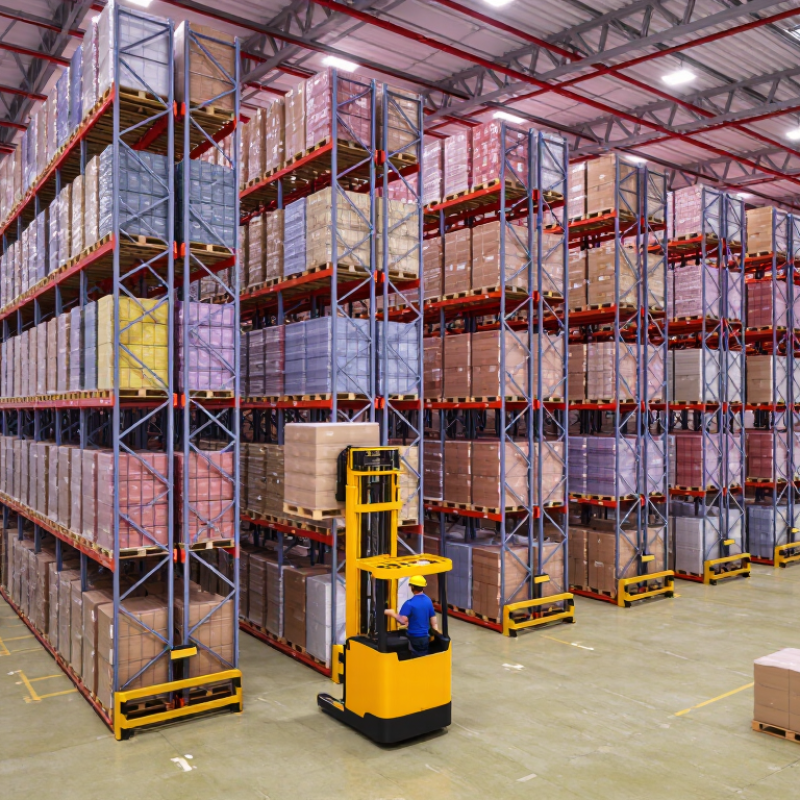
Drive-in Storage is often chosen when pallet density matters more than immediate access to every load. In a busy warehouse, forklifts enter deep rack lanes to place or retrieve pallets, while the structure uses fewer aisles than selective racking. That can free valuable floor space. It also asks operators to work carefully around rack frames, pallet stops, and changing load patterns. Small design choices matter.

Industry reports help frame the investment, but they do not prove that one rack type fits every site. MHI’s 2024 Annual Industry Report describes continuing investment in supply-chain technology and highlights efficiency, resilience, and workforce pressures as major priorities. The report is broad; it does not provide a universal performance figure for drive-in racks. Buyers should therefore validate capacity, throughput, and operating assumptions against their own SKU data and forklift procedures. A dense rack can look efficient on a drawing and still create congestion at the dock.

As warehouse-design consultant Kevin H. Duggan puts it, “Storage density only creates value when the operating method can use it safely and consistently.” Treat that as a practical design principle, not a substitute for a site-specific engineering review. This guide compares the leading drive-in storage configurations for global buyers, including single-entry and through-rack layouts, and explains where each may fit. It also examines pallet compatibility, lane depth, selectivity, installation, and maintenance. The trade-off is real: density rises, but access narrows. A careful buyer should test the layout with actual load dimensions, turning clearances, and replenishment patterns before approving a purchase.
2026 Top Types of Drive in Storage for Global Buyers

Drive-In Racking Basics: LIFO Access and Typical 4–10-Pallet-Deep Lanes

Drive-in racking uses shared rails to hold pallets in deep storage lanes. A forklift enters the lane to place or retrieve loads, so the system uses fewer aisles than selective pallet racking. Access follows LIFO: the last pallet loaded is the first one removed. That detail matters. Earlier pallets remain behind it until the lane is cleared.

Many installations use lanes roughly four to ten pallets deep. A four-deep lane can offer a practical balance between storage density and retrieval flexibility. Ten-deep lanes may suit larger quantities of the same product, but they require tighter inventory planning. If demand changes often, deep lanes can leave usable stock blocked at the rear.

Pallet size, load stability, forklift turning clearance, and rail alignment all affect daily operation. Loads should fit the lane consistently, with enough clearance to avoid contact during placement. Even small differences in pallet condition can cause delays. Operators also need clear lane labels and a reliable loading sequence. The trade-off is easy to underestimate: more density can mean less direct access. Before choosing lane depth, compare expected stock rotation with actual order patterns, not just available floor space.

Single-Entry Drive-In Systems: High-Density Storage for One SKU per Lane

2026 Top Types of Drive in Storage for Global Buyers

Single-Entry Drive-In Systems: High-Density Storage for One SKU per Lane

Single-entry drive-in systems store pallets deep inside compact rack lanes. Forklifts enter from one side and place loads on guided rails. This design removes many service aisles, increasing floor utilization in warehouses with limited space. One lane, one SKU.

The system works best for uniform pallets, stable loads, and products with predictable rotation. A food distributor, for example, might dedicate one 12-meter lane to identical cartons. Operators load the newest pallet behind the older ones. Retrieval follows a last-in, first-out pattern, which may not suit every inventory plan.

Good layout decisions begin with pallet dimensions, forklift clearance, load capacity, and lane depth. Rails must support pallets evenly, while upright frames need regular inspection for impact damage. Clear operating rules matter. Small mistakes can affect several pallets in one lane.

From practical warehouse experience, high density often reduces picking flexibility. That trade-off deserves attention. If a buyer handles many SKUs with frequent order changes, selective racking may perform better despite requiring more aisles. Single-entry drive-in storage is powerful, but it is not a universal answer. Local safety requirements, equipment training, and documented inspections should guide the final specification.

Drive-Through Racking: Two-Sided Access for FIFO Inventory Rotation

Drive-Through Racking: Two-Sided Access for FIFO Inventory Rotation

Drive-through racking supports FIFO inventory rotation by allowing forklifts to enter both ends of each storage lane. Operators load fresh pallets from the receiving side. They retrieve older pallets from the opposite side. This movement reduces stock aging and keeps product flow visible.

A well-planned system uses adjustable rails, suitable pallet dimensions, and clear lane labels. Forklift operators need enough turning space at both ends. In a chilled warehouse, this design can reduce unnecessary travel through cold zones. It also helps separate inbound and outbound traffic. Small details matter here. Damaged pallets can block a lane quickly.

Global buyers should check load capacity, seismic conditions, floor tolerance, and local safety requirements before ordering. Rack depth affects storage density, but deeper lanes may slow access when demand changes. A site survey should measure aisle width, ceiling height, pallet weight, and forklift reach. Do not rely on catalog dimensions alone.

The system works best with stable pallet sizes and predictable product batches. Mixed-SKU storage may create delays, even with two-sided access. In practice, some warehouses overestimate their FIFO gains. Poor labeling and irregular replenishment can weaken the process. A trial lane, daily inspection routine, and operator feedback can reveal these problems early. The design is efficient, but not effortless.

Structural Variants: Standard, Mobile, and Shuttle-Assisted Drive-In Systems

2026 Top Types of Drive in Storage for Global Buyers

Structural Variants: Standard, Mobile, and Shuttle-Assisted Drive-In Systems

Drive-in storage uses deep lanes, guide rails, and forklifts entering the rack structure. Standard systems suit uniform pallets with low product variety. They can improve floor utilization by roughly 60% compared with selective racking, according to common warehouse design benchmarks. However, operators must accept limited stock rotation and deeper travel distances.

Mobile drive-in systems place rack blocks on powered bases. Closed aisles open only when access is required. This arrangement can release valuable floor space, especially where land and cooling costs remain high. The 2024 MHI Annual Industry Report notes that 55% of supply chain leaders planned to increase automation investment. Mobile systems fit that direction, but they require stronger floors, safety interlocks, and disciplined maintenance records.

Shuttle-assisted drive-in systems add semi-automated pallet movement inside deep channels. A shuttle can position loads without repeated forklift entry, reducing collision exposure and improving consistency. Some technical studies report lane depths beyond 10 pallets, depending on pallet quality and load design. That number is not universal. Real performance changes with temperature, battery endurance, operator training, and retrieval frequency. In my experience, the most expensive mistake is choosing density before checking SKU turnover. A dense lane can look efficient, yet become slow when every pallet needs access.

Global Selection Criteria: Load Ratings, Aisle Widths, and ANSI MH16.1 Design Rules

2026 Top Types of Drive in Storage for Global Buyers

Global buyers should evaluate drive-in and drive-through storage through load ratings, aisle widths, and ANSI MH16.1 design rules. Start with the pallet weight, height, dimensions, and entry direction. A rack rated for 1,000 kilograms per position may not support that load at every beam level. Upright spacing, rail length, forklift impact, and seismic conditions can change the calculation. Ask for stamped engineering documents, load plaques, and installation tolerances. Do not rely on a sales sheet alone.

Aisle width must match the actual forklift model, not a generic equipment category. Measure turning clearance with the pallet installed. A narrow aisle can increase storage density, yet it may slow loading and raise collision risk. ANSI MH16.1 provides a useful design framework for steel storage racks, but buyers should also confirm local building codes, fire requirements, anchoring rules, and inspection duties. Standards are not identical everywhere. That matters.

Tips: Mark the travel lanes on the floor before ordering. Test a loaded pallet through a sample bay. Keep heavier pallets in lower positions when operations allow. Review the design after the first month; real traffic often exposes assumptions that drawings miss. Some layouts look efficient. They are not always practical.

2026 Top Types of Drive-In Storage for Global Buyers

Typical planning ranges for pallet load ratings and clear aisle widths. Final rack capacity and aisle design must be verified for the forklift, pallet, building, seismic zone, and site conditions.

ANSI MH16.1 provides design, testing, and utilization rules for industrial steel storage racks; it does not prescribe one universal load rating or aisle width for every rack type. The ranges shown are common industry planning benchmarks, not certified capacities.

FAQS

What is a single-entry drive-in storage system?

Forklifts enter each lane from one side. Pallets travel deep inside on guided rails. Each lane usually stores one SKU.

Which products suit single-entry drive-in storage?

It suits uniform pallets, stable loads, and predictable product rotation. Identical cartons can fill a 12-meter lane efficiently. Mixed products may create picking delays.

Does single-entry storage follow FIFO or LIFO?

It normally follows LIFO because pallets enter and leave from one side. The newest pallet may leave first. This may not suit products requiring strict FIFO rotation.

What are the main benefits of single-entry drive-in storage?

It removes many service aisles and increases floor utilization. This design can help warehouses with limited space. High density comes with less picking flexibility.

How does drive-through racking support FIFO rotation?

Forklifts enter from both ends of each lane. Fresh pallets enter from one side, while older pallets leave from the other. This supports clearer product flow and reduces stock aging.

What should buyers measure before selecting drive-through racking?

Measure aisle width, ceiling height, pallet weight, floor tolerance, and forklift reach. Check seismic conditions and local safety requirements. Do not rely on catalog dimensions alone.

What problems can occur in deep storage lanes?

A damaged pallet can block an entire lane. Poor labels may weaken FIFO control. Small operating mistakes can affect several pallets.

How can a warehouse test whether the system fits?

Run a trial lane with real pallets and normal operators. Record loading time, retrieval time, and lane blockages. Operator feedback may reveal problems that drawings miss.

Is high-density storage suitable for every warehouse?

No. Warehouses with many SKUs and frequent order changes may need selective racking. High density sounds attractive, but flexibility can matter more.

What safety practices should accompany these systems?

Train forklift operators and define clear loading rules. Inspect rails, frames, and pallets regularly for damage. Details matter. Local requirements should guide the final specification.

Conclusion

Drive-in Storage is a high-density warehousing solution designed to maximize floor space by allowing forklifts to enter storage lanes and place pallets on deep rails. Most systems use a last-in, first-out (LIFO) method, with typical lane depths ranging from four to ten pallets. Single-entry drive-in layouts are especially suitable for storing large quantities of one SKU per lane, while drive-through racking provides access from both ends and supports first-in, first-out (FIFO) inventory rotation.

For 2026 global buyers, available configurations include standard fixed systems, mobile drive-in designs, and shuttle-assisted solutions that improve storage efficiency and reduce forklift travel. Selection should consider pallet weight, rack load ratings, aisle width, ceiling height, equipment compatibility, and expected inventory turnover. Buyers should also verify that the system is engineered and installed according to applicable safety requirements, including ANSI MH16.1 design principles, to ensure reliable performance in different warehouse environments.

Amelia

Amelia

Amelia is a seasoned marketing professional with a wealth of expertise in our company’s core offerings. With an unwavering passion for driving growth and innovation, she plays a pivotal role in shaping our marketing strategies and enhancing brand visibility. A key aspect of her responsibilities......